When a storm, flood or fire cuts off water and sewer to a neighborhood, Abilene Porta Pros can usually get standard units on site within hours, not days. We stock trucks locally and prioritize emergency dispatch over routine swaps. A single unit covers a household; larger shelters need one per 20 people under OSHA 1926.51(c).
Fast deployment matters more than fancy equipment here. Most disaster calls start with standard portable toilets because they go down quick and need no hookup, just a flat, stable spot per ADA Standards section 302.1 if accessible placement is needed. For shelters, churches or command posts running longer than a few days, we bring in handwashing stations too, since 29 CFR 1910.141(d)(2) requires soap and towels or a hand-drying device, not just sanitizer. Hand sanitizer alone does not meet that standard, and a disaster site is exactly where people forget that detail. If the location has no power, we can pair units with a temporary power pole or a light tower so night shifts and cleanup crews aren't working blind. Larger operations, like a multi-agency staging area, often need a mix: a few ADA accessible units for anyone with mobility limits, some standard units for volume, and a roll-off dumpster for debris. Storm debris removal moves faster with a dumpster on site instead of trucking scraps offsite every load, and OSHA 1926.25 covers keeping that work area clear as material piles up. We've handled everything from single flooded homes near Impact, 3.7 miles north of Abilene, to larger staging efforts closer to town.
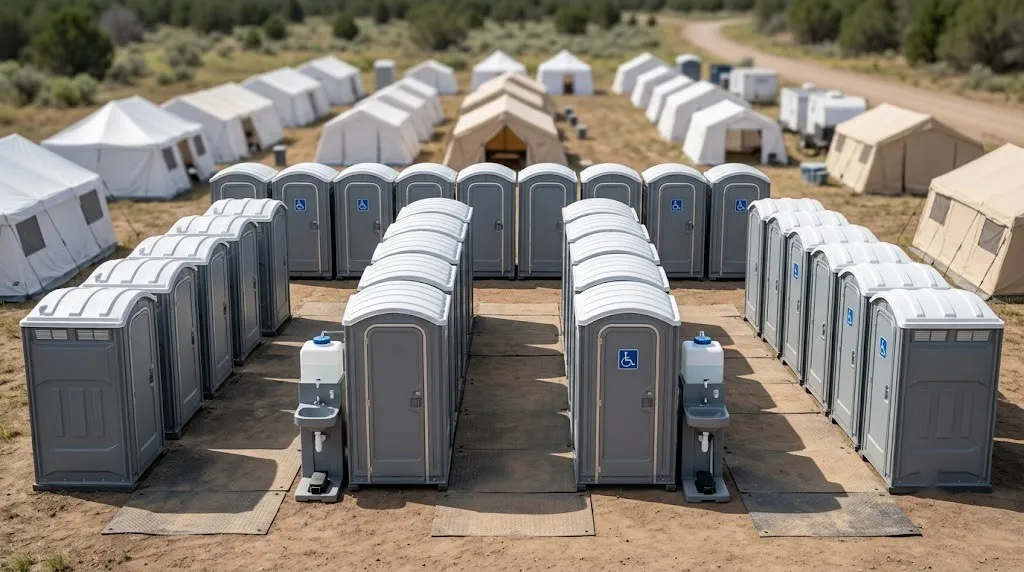
Response time depends on what's already committed, but disaster calls jump the queue. We don't run first-come routing during an active emergency in Abilene; we run triage. A downed water main or a flooded lift station gets a unit before a routine weekend event does. If you're coordinating for a shelter, a triage point or a work camp, call our emergency line directly rather than filling out a standard quote form, since that request gets flagged and handled differently. Delivery itself needs about 60 feet of straight clearance behind the truck for anything beyond a hand-carried standard unit, so let us know if debris or flooding blocks normal access. We've reached sites as far as Merkel, 16.5 miles west, and Clyde, 15.3 miles east of Abilene, within the same response window as in-town calls, because our trucks stage centrally. If your septic system backed up or failed during the event, we also run septic pumping service and can bring a holding tank rental as a bridge while the system gets fixed. A typical residential tank holds around 1,000 gallons and gets pumped every 3 to 5 years under normal use, but flooding can force an emergency pump-out well outside that schedule.
Usually not right away, but it depends on where the units sit and for how long. Placement in the public right of way needs confirming with the city; we have not verified a blanket disaster exemption and won't guess at one. What we do know: OSHA 1926.51(a)(1) requires an adequate supply of potable water at any place of employment, which matters if your crew is working a multi-day cleanup, not just sheltering residents. If you're running a longer-term recovery site with paid or volunteer labor doing debris cleanup, you may also fall under general OSHA portable toilet requirements rather than the relaxed expectations of a short-term residential emergency. For anyone unsure whether their situation counts as a jobsite or a household emergency, our FAQ page walks through the difference, and you can always call contact to ask before you set anything up. We'd rather answer that question directly than have a unit sit in the wrong spot for a week.
| unit | duration | typical price |
|---|---|---|
| standard | day | $150 |
| standard | week | $200 |
| ada | day | $230 |
| septic | day | $250 |
Prices above reflect typical measured rates; your actual quote depends on duration, access and how many units the response needs. For ongoing recovery work stretching past a few weeks, ask about monthly rental rates instead of paying day rates the whole time.
Under OSHA 1926.51(c), figure one toilet for every 20 people, with more urinals added as headcount climbs past 20. A 100-person shelter in Abilene needs roughly five units minimum. Our placement guide walks through exact ratios for larger counts.
We'll get as close as conditions allow, but standing water and washed-out roads sometimes force us to stage nearby and finish delivery once access clears. Call request a quote with your address so we can plan the route before dispatching.
Standard units need no power at all, which is why they're the default for disaster response. If you need lighting or need to run a trailer with pumps, we can add a temporary power pole alongside the toilets.
Yes. A handwashing station rental meets 29 CFR 1910.141(d)(2) with soap and towels, which sanitizer stations alone don't satisfy. Most shelters pair one handwash station near each restroom cluster.
Short jobs run daily; anything past two or three weeks usually shifts to monthly rental pricing, which costs less per day than repeated daily rates. Ask our office to switch billing once the timeline firms up.
Yes. Abilene Porta Pros delivers disaster relief sanitation across Abilene and the surrounding metro, with same-day and next-day drop-off available on most orders.
Pricing depends on the unit and how long you need it. See our cost breakdown and request a free quote for an exact figure.
Standard rentals include scheduled service — a pump-out, a clean, a restock and fresh deodorizer. Busy or hot-weather sites can be serviced more often.
Call now or request a free quote — clean units, on-time delivery, transparent pricing.